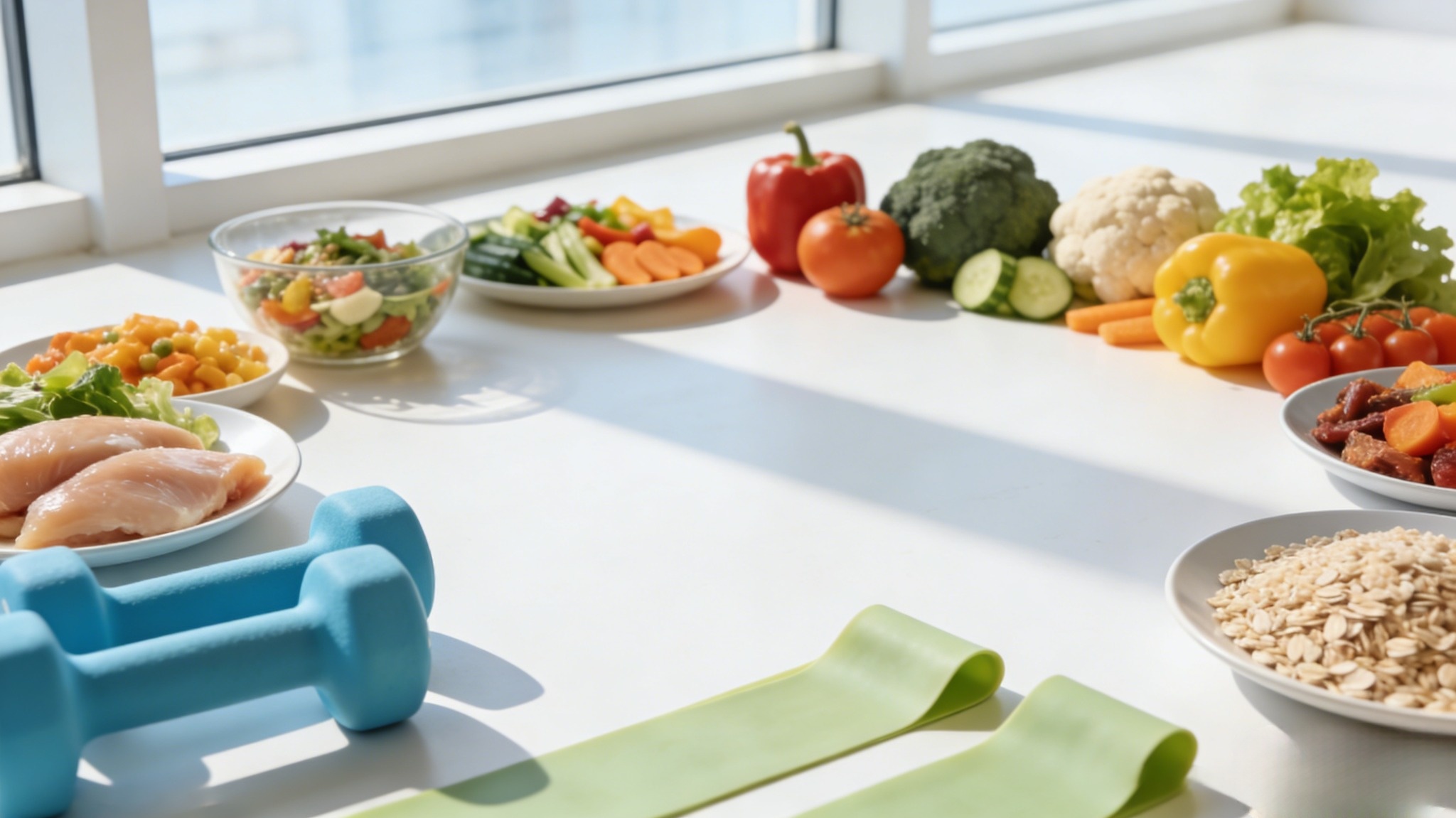
The debate between diet and exercise for weight loss has been ongoing for decades. Some swear by extreme calorie restriction, while others focus exclusively on intense workouts. The truth? Both play crucial roles, but their impact depends on your specific goals: weight loss versus body recomposition.
For Weight Loss: Diet Takes the Lead
When your primary goal is losing weight on the scale, diet has the most significant impact. Research consistently shows that weight loss is approximately 75% diet and 25% exercise. Here's why:
The Math of Calorie Deficit
To lose one pound of fat, you need a calorie deficit of approximately 3,500 calories. Creating this deficit through diet alone is much easier than through exercise alone. For example, eliminating one daily latte (150 calories) is easier than running for 45 minutes (300-400 calories burned, depending on intensity).
Exercise's Limited Calorie Burning
While exercise burns calories, the amount is often overestimated. A 30-minute moderate workout might burn 200-300 calories, which can be easily offset by just one extra snack or slightly larger portion. Diet provides more precise control over your total calorie intake.
Efficiency and Consistency
Creating a calorie deficit through dietary changes is more efficient and consistent than relying on exercise. You can control what you eat every day, but exercise frequency and intensity can vary due to time, energy, or other factors.
For Body Recomposition: Exercise is Essential
If your goal is body recomposition—losing fat while building or maintaining muscle—exercise becomes much more important than diet alone. Here's why:
Muscle Building Requires Stimulus
Building muscle requires progressive overload—challenging your muscles with increasing resistance. No amount of dietary changes can stimulate muscle growth. Exercise, particularly strength training, provides the necessary stimulus for muscle development.
Metabolic Benefits of Muscle
Each pound of muscle you gain increases your resting metabolism by 6-10 calories per day. This means your body burns more calories 24/7, even while sleeping. Diet alone cannot provide this metabolic boost.
Improved Body Composition
Exercise helps ensure that weight loss comes from fat rather than muscle. Without exercise, up to 25% of weight loss during calorie restriction can be muscle mass. With exercise, you preserve or build muscle while losing fat, creating a leaner, more toned appearance.
The Synergy: Combining Both Approaches
The most effective approach combines diet and exercise strategically based on your goals:
For Weight Loss Focus
When weight loss is your primary goal, focus on creating a moderate calorie deficit (300-500 calories) primarily through diet, then add exercise to accelerate results and preserve muscle. Aim for:
- Diet: Create most of your deficit through dietary changes
- Exercise: 3-4 moderate sessions per week (150-200 minutes total)
- Result: Faster weight loss with preserved muscle mass
For Body Recomposition Focus
When body recomposition is your goal, focus on exercise with a slight calorie deficit or maintenance calories:
- Diet: Adequate protein (0.8-1g per pound), slight deficit or maintenance
- Exercise: 4-5 sessions per week, emphasizing strength training
- Result: Fat loss with muscle gain or maintenance
Common Misconceptions
Misconception 1: "Exercise Can Compensate for Poor Diet"
Many people believe they can eat whatever they want as long as they exercise enough. This is false. Exercise burns far fewer calories than most people think, and it's easy to out-eat your workout efforts. You can't out-train a poor diet.
Misconception 2: "Diet Alone is Sufficient"
While diet is more powerful for weight loss, diet alone often leads to muscle loss and a slower metabolism. Exercise helps preserve muscle mass, which supports long-term weight maintenance and creates a more attractive physique.
Misconception 3: "More Exercise Always Equals Better Results"
More exercise isn't always better. Overtraining can lead to injury, burnout, and increased hunger that makes dietary adherence more difficult. Quality and consistency matter more than quantity.
Practical Recommendations
If You're Overweight or Obese
For significant weight loss, prioritize diet with moderate exercise:
- Create a 300-500 calorie deficit primarily through diet
- Add 3-4 moderate exercise sessions per week
- Focus on protein intake to preserve muscle
- Track both calories and exercise for accountability
If You're Normal Weight but High Body Fat
For body recomposition, prioritize exercise with adequate nutrition:
- Engage in strength training 3-4 times per week
- Consume adequate protein (0.8-1g per pound)
- Maintain slight deficit or maintenance calories
- Add cardio for additional calorie burning and cardiovascular health
If You're Already Lean
For maintaining or slightly improving your physique, focus on exercise performance and muscle building with maintenance calories:
- Progressive overload in strength training
- Adequate protein for muscle maintenance
- Consistent training schedule
- Track strength gains and body measurements
The Bottom Line
The impact of diet versus exercise depends on your specific goals. For weight loss, diet takes the lead because it's more efficient at creating calorie deficits. For body recomposition, exercise is essential because it builds muscle and improves metabolic rate.
The most effective approach combines both strategically based on your individual situation. Use our Daily Tracker to monitor your diet, exercise, and progress over time.