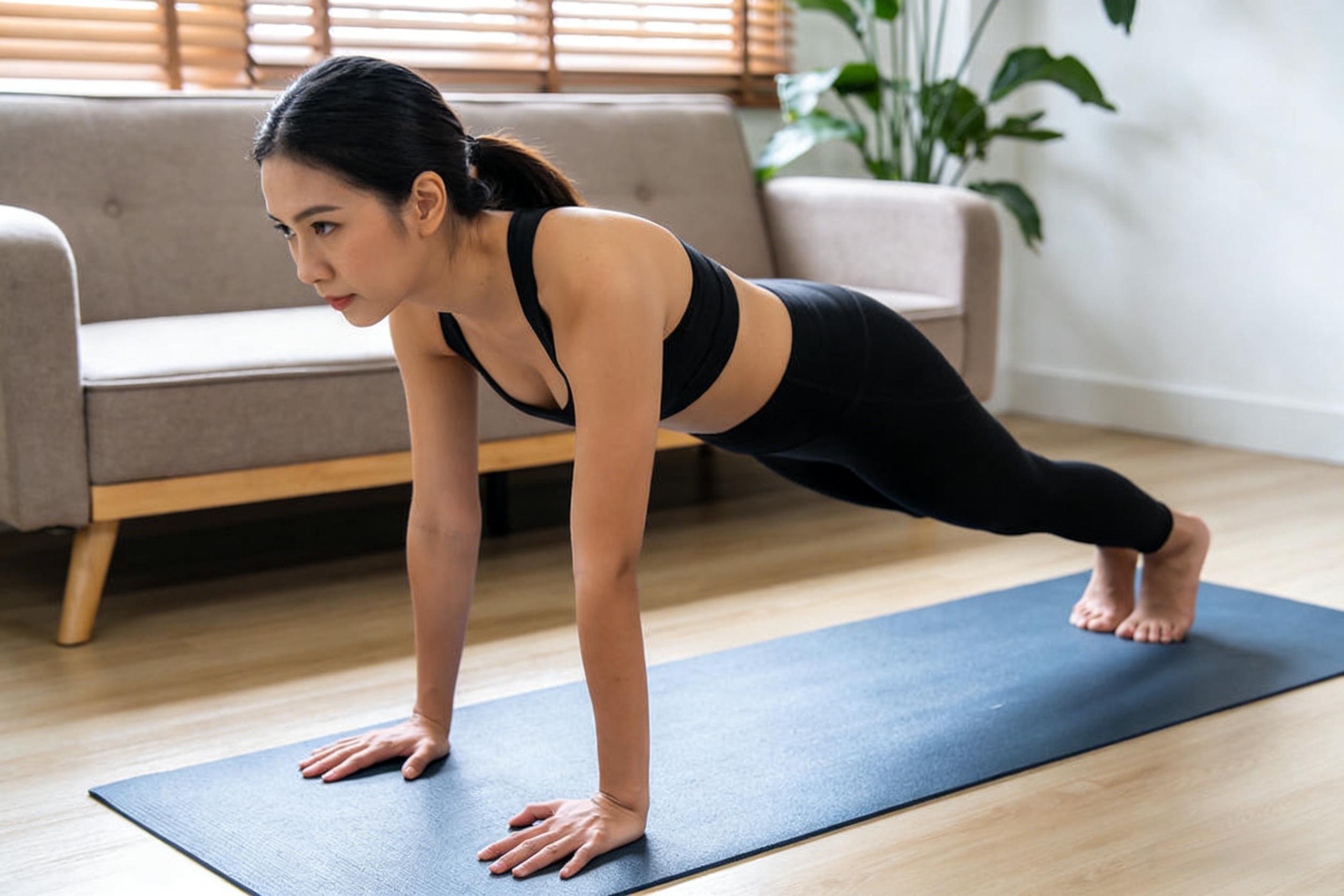
You don't need a gym membership or expensive equipment to get in shape. In fact, some of the most effective exercises use nothing but your own body weight. Whether you're working out at home due to convenience, budget constraints, or personal preference, you can build strength, improve cardiovascular fitness, and achieve your weight loss goals with zero equipment required.
Why Bodyweight Training Works
Bodyweight exercises have been used for centuries to build functional strength and fitness. The ancient Greeks trained their warriors using calisthenics -- a form of exercise that relies solely on body weight. Modern research confirms what they knew: bodyweight training can be just as effective as weight training for building muscle, burning fat, and improving overall fitness.
A study published in the Journal of Strength and Conditioning Research found that bodyweight push-ups produced similar muscle activation in the chest, shoulders, and triceps as bench presses. Another study in the European Journal of Applied Physiology showed that high-intensity bodyweight cardio exercises can burn calories at a rate comparable to running on a treadmill.
The key advantages of no-equipment home workouts include:
- Accessibility: You can exercise anytime, anywhere
- Cost-effective: Completely free
- Functional fitness: Movements that translate to real-world activities
- Lower injury risk: Natural movements with less strain on joints
- Scalability: Easy to modify for any fitness level
Cardio Exercises: Get Your Heart Pumping
Cardiovascular exercise is essential for heart health, calorie burning, and overall fitness. Here are the most effective no-equipment cardio moves you can do at home:
1. Jumping Jacks
Jumping jacks are a classic cardio exercise that works your entire body while elevating your heart rate. They're perfect for warming up or as part of a high-intensity interval training (HIIT) circuit.
How to do it: Stand with feet together and arms at your sides. Jump your feet out to shoulder-width apart while raising your arms overhead. Jump back to the starting position. Repeat continuously for 30-60 seconds.
Benefits: Full-body movement, improves coordination, burns approximately 10-15 calories per minute.
2. High Knees
High knees are an explosive cardio exercise that targets your core, hip flexors, and legs while providing an intense cardiovascular challenge.
How to do it: Run in place while driving your knees up toward your chest as high as possible. Pump your arms in opposition to your legs. Land softly on the balls of your feet. Continue for 30-45 seconds.
Benefits: Builds leg strength, engages core muscles, burns 12-18 calories per minute, improves running form.
3. Mountain Climbers
Mountain climbers combine cardio with core strength, making them one of the most efficient bodyweight exercises available.
How to do it: Start in a high plank position with hands under shoulders. Drive one knee toward your chest, then quickly switch legs, bringing the other knee forward while extending the first leg back. Continue alternating legs at a rapid pace for 30-45 seconds.
Benefits: Full-body exercise, intense cardio, core strengthening, improves agility.
4. Burpees
Often called the ultimate bodyweight exercise, burpees combine a squat, plank, push-up, and jump into one fluid movement.
How to do it: From standing, squat down and place hands on the floor. Jump feet back into a plank position. Optional: add a push-up. Jump feet back to your hands, then explosively jump up with arms overhead. Repeat for 10-15 repetitions.
Benefits: Burns 15-20 calories per minute, full-body conditioning, builds explosive power.
5. Butt Kicks
Butt kicks are a lower-impact cardio option that still elevates your heart rate while targeting your hamstrings.
How to do it: Jog in place while bringing your heels up to touch your glutes. Keep your core engaged and pump your arms. Continue for 45-60 seconds.
Benefits: Hamstring activation, lower impact on joints, good warm-up exercise.
6. Skaters
Skaters mimic the lateral movement of ice skating, providing a great cardio workout while targeting your inner and outer thighs.
How to do it: Leap sideways from one foot to the other, swinging your arms like a skater. Touch your back foot lightly to the ground behind you. Continue alternating sides for 45-60 seconds.
Benefits: Lateral movement training, inner/outer thigh toning, improves balance.
Strength Exercises: Build Muscle at Home
Building muscle is crucial for boosting metabolism, improving body composition, and maintaining functional strength as you age. These bodyweight exercises target all major muscle groups:
1. Plank
The plank is one of the most effective core exercises, engaging your entire midsection while also working your shoulders, back, and glutes.
How to do it: Start in a forearm plank position with elbows under shoulders and forearms parallel. Keep your body in a straight line from head to heels. Engage your core and hold for 30-60 seconds. For beginners, start with 15-20 seconds.
Variations:
- High plank: Perform on hands instead of forearms
- Side plank: Rotate to one side, supporting weight on one forearm
- Plank with shoulder taps: Tap opposite shoulder while maintaining stable hips
- Plank jacks: Jump feet in and out while holding plank position
2. Bodyweight Rows (Using a Table or Counter)
While traditional rows require weights or machines, you can perform an effective rowing motion using a sturdy table, counter, or low bar.
How to do it: Lie under a sturdy table and grip the edge with hands shoulder-width apart. Keep your body straight and pull your chest up to the edge, squeezing your shoulder blades together. Lower with control. Perform 10-15 repetitions.
Benefits: Strengthens back muscles, improves posture, balances push movements.
3. Push-Ups
The push-up is the king of upper body bodyweight exercises, targeting your chest, shoulders, triceps, and core simultaneously.
How to do it: Start in a high plank position. Lower your body until your chest nearly touches the floor, keeping elbows at about a 45-degree angle. Push back up to starting position. Aim for 10-20 repetitions.
Modifications:
- Knee push-ups: Perform with knees on the ground for beginners
- Incline push-ups: Hands elevated on a bench or counter for easier variation
- Decline push-ups: Feet elevated for increased difficulty
- Diamond push-ups: Hands close together in a diamond shape to target triceps
4. Squats
Squats are the foundation of lower body training, working your quadriceps, hamstrings, glutes, and core.
How to do it: Stand with feet shoulder-width apart. Push your hips back and bend your knees as if sitting in a chair. Keep your chest up and weight in your heels. Lower until thighs are parallel to the ground, then stand back up. Perform 15-20 repetitions.
Variations:
- Jump squats: Add an explosive jump at the top
- Sumo squats: Wide stance with toes pointing outward for inner thigh focus
- Single-leg squats: Advanced variation for increased difficulty
- Pulse squats: Small pulses at the bottom for added burn
5. Lunges
Lunges are excellent for building leg strength, improving balance, and addressing muscle imbalances between legs.
How to do it: Step forward with one leg and lower your hips until both knees are bent at approximately 90 degrees. Your front knee should be aligned with your ankle. Push back to the starting position. Perform 10-15 repetitions per leg.
Variations:
- Reverse lunges: Step backward instead of forward (easier on knees)
- Walking lunges: Continue stepping forward with each repetition
- Jumping lunges: Explosively switch legs in the air
- Side lunges: Step to the side to target inner and outer thighs
6. Glute Bridges
Glute bridges target your posterior chain -- the muscles on the back side of your body -- which are crucial for posture and athletic performance.
How to do it: Lie on your back with knees bent and feet flat on the floor. Lift your hips off the floor until your knees, hips, and shoulders form a straight line. Squeeze your glutes and hold for 2 seconds, then lower. Perform 15-20 repetitions.
Progressions:
- Single-leg glute bridge: Extend one leg while lifting hips
- Feet-elevated glute bridge: Place feet on a chair or couch
- Glute bridge march: Alternate lifting feet while holding hip position
7. Superman
The superman exercise strengthens your lower back, an often-neglected muscle group that's crucial for spinal health.
How to do it: Lie face down with arms extended overhead. Simultaneously lift your arms, chest, and legs off the floor, squeezing your lower back. Hold for 2-3 seconds, then lower. Perform 10-15 repetitions.
Sample Home Workout Routines
Here are three complete workout routines you can do at home with no equipment. Choose the one that matches your fitness level and goals.
Beginner Full-Body Workout (20 minutes)
Perfect for those new to exercise or returning after a break.
- Jumping jacks -- 30 seconds
- Rest -- 30 seconds
- Wall push-ups or knee push-ups -- 10 repetitions
- Rest -- 30 seconds
- Bodyweight squats -- 15 repetitions
- Rest -- 30 seconds
- High knees (march in place if needed) -- 30 seconds
- Rest -- 30 seconds
- Forearm plank -- 20 seconds
- Rest -- 30 seconds
- Glute bridges -- 15 repetitions
- Rest -- 60 seconds
Repeat the circuit 2-3 times.
Intermediate HIIT Workout (25 minutes)
A high-intensity routine that burns calories and builds strength.
- Burpees -- 45 seconds
- Rest -- 15 seconds
- Push-ups -- 45 seconds
- Rest -- 15 seconds
- Mountain climbers -- 45 seconds
- Rest -- 15 seconds
- Jump squats -- 45 seconds
- Rest -- 15 seconds
- High plank -- 45 seconds
- Rest -- 15 seconds
- Jumping lunges -- 45 seconds
- Rest -- 15 seconds
Repeat the circuit 3-4 times.
Advanced Strength Circuit (30 minutes)
Challenging exercises for those with a solid fitness foundation.
- Plyometric push-ups -- 12 repetitions
- Single-leg squats (each leg) -- 10 repetitions
- Decline push-ups -- 15 repetitions
- Jumping lunges -- 20 repetitions total
- Bodyweight rows (using table) -- 12 repetitions
- Plank with shoulder taps -- 45 seconds
- Burpees with push-up -- 10 repetitions
- Single-leg glute bridges (each leg) -- 15 repetitions
- Side plank (each side) -- 30 seconds
Rest 60 seconds between exercises. Complete 3 rounds.
Tips for Effective Home Workouts
To get the most out of your no-equipment home workouts, follow these guidelines:
- Create a dedicated space: Clear an area where you can move freely without obstacles
- Warm up properly: Spend 5-10 minutes doing light cardio and dynamic stretches before your main workout
- Focus on form: Quality repetitions are more important than quantity
- Progress gradually: Increase difficulty by adding repetitions, sets, or trying harder variations
- Stay consistent: Aim for at least 3-4 workouts per week for best results
- Track your progress: Use our Daily Tracker to log your workouts and monitor improvements
- Cool down: End each session with stretching to improve flexibility and reduce soreness
Overcoming Common Challenges
Working out at home comes with unique challenges. Here's how to overcome them:
- Lack of motivation: Schedule workouts like appointments, find an online workout buddy, or follow along with workout videos
- Limited space: Focus on exercises that don't require much room, like planks, push-ups, and lunges
- Noisy exercises: Substitute high-impact moves with low-impact alternatives (marching instead of jumping)
- Plateaus: Regularly change your routine, increase intensity, or try new exercise variations
"The best workout is the one you'll actually do. Having access to a gym is great, but not necessary. Your body is the only equipment you truly need to build strength, burn fat, and improve your health."
The Bottom Line
Home workouts without equipment can be incredibly effective for building fitness, losing weight, and improving your overall health. By combining cardio exercises like jumping jacks, high knees, and burpees with strength movements like planks, push-ups, and squats, you can create a comprehensive fitness routine that rivals any gym workout.
The key is consistency and progressive overload -- gradually making your workouts more challenging as you get stronger. Start with the beginner routine if you're new to exercise, and work your way up to more advanced variations. Remember that any movement is better than no movement, and the convenience of home workouts means you're more likely to stick with your fitness journey long-term.
Use our BMI Calculator to establish your baseline, track your workouts with our Daily Tracker, and celebrate every small victory along the way. Your fitness goals are achievable -- no gym membership required.