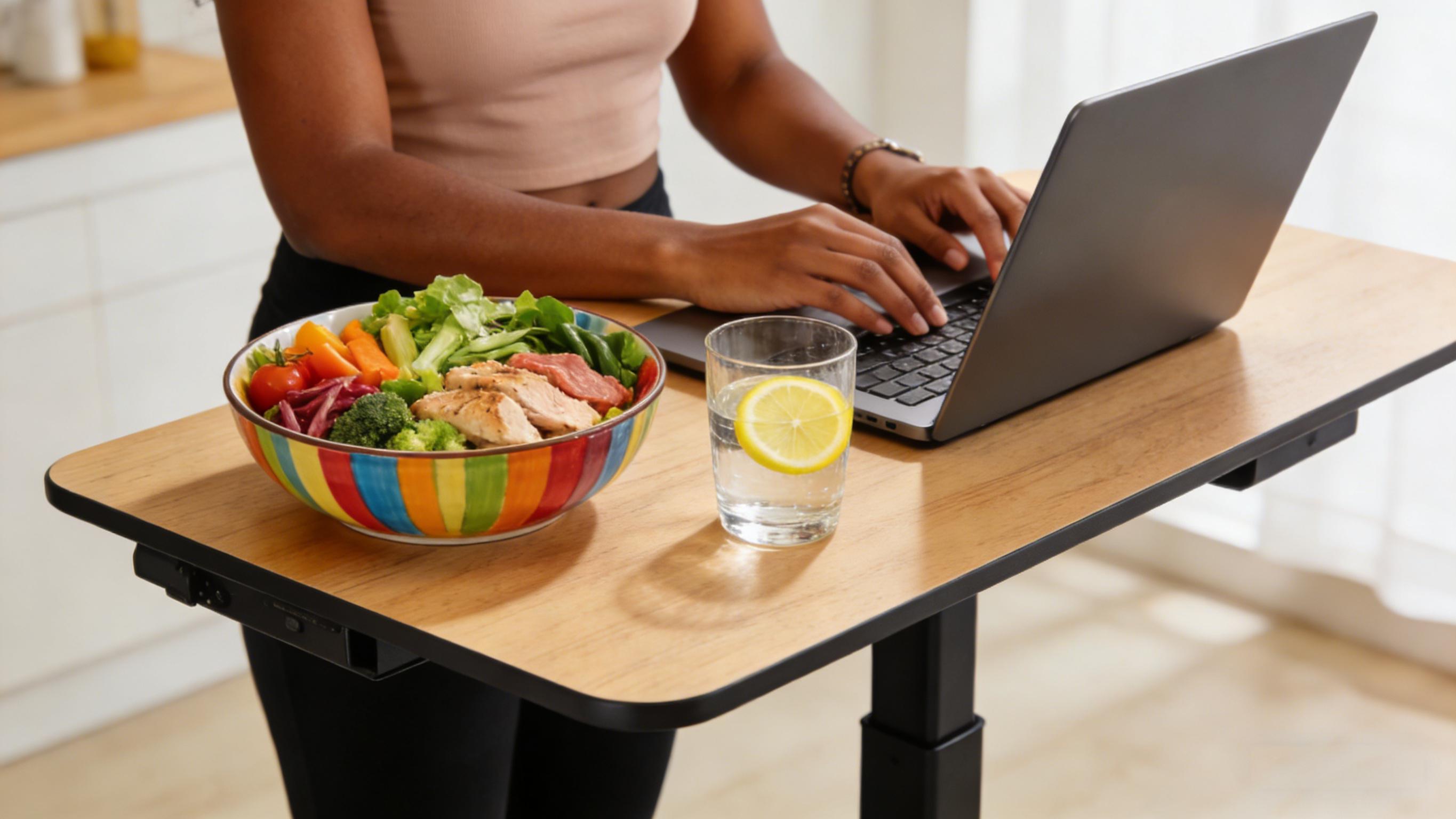
Weight loss doesn't require complex rules or strict schedules. In fact, some of the most effective strategies are simple daily habits that align with your body's natural signals. By making small, sustainable changes to your routine, you can support your weight loss goals without feeling restricted or overwhelmed.
Stand More, Sit Less
Standing burns more calories than sitting and helps maintain muscle tone. When possible, choose standing over sitting throughout your day:
- Use a standing desk: If you work at a computer, alternate between sitting and standing. Aim for 15-20 minutes of standing every hour.
- Take standing breaks: When watching TV or using your phone, stand up and move around during commercials or between episodes.
- Walk while talking: Take phone calls standing up or pacing around your space.
- Park farther away: When running errands, park at the back of the lot to add extra walking steps.
Research shows that standing for just 3 hours more per day can burn an additional 50-150 calories, which adds up significantly over time.
Eat Protein and Vegetables First
The order in which you eat your food matters more than you might think. Start every meal with protein and vegetables before moving to starches and carbs:
Why This Works: Protein is the most satiating macronutrient, meaning it keeps you feeling full longer. Vegetables provide volume and fiber, which also increases satiety without adding many calories. By filling up on these nutrient-dense foods first, you'll naturally eat less of the more calorie-dense starches.
Practical Tips:
- Start with a salad or vegetable soup before your main course
- Eat your protein source (chicken, fish, tofu, eggs) before touching rice, pasta, or bread
- Fill half your plate with vegetables, one-quarter with protein, one-quarter with starches
- Choose whole vegetables over processed ones whenever possible
Stop Eating When You're Full
Many of us were taught to clean our plates as children, but this habit can work against weight loss goals. Learning to stop eating when you're satisfied, not stuffed, is a crucial skill:
Listen to Your Body: Pay attention to hunger and fullness cues. Eat slowly and pause between bites to give your brain time to register satisfaction.
Don't Fear Waste: It's better to have leftovers than to overeat. Save extra food for later, compost it, or adjust portion sizes next time. Your body is not a trash can—forcing yourself to finish food when you're full doesn't help anyone.
Practical Strategies:
- Start with smaller portions—you can always go back for more if truly hungry
- Use a timer: set it for 20 minutes and assess your hunger level when it goes off
- Put your fork down between bites to slow down your eating pace
- Drink water with meals to help you feel full naturally
Eat Only When Hungry
Forget rigid meal schedules and eating windows. The most natural approach is to eat only when your body signals hunger:
Trust Your Hunger Signals: Your body knows when it needs fuel. If you wake up not hungry, there's no rule saying you must eat breakfast. If you go all day without feeling hungry, that's okay too. Intuitive eating means honoring your body's natural rhythms rather than following external rules.
Benefits of This Approach:
- Prevents mindless snacking and emotional eating
- Helps you distinguish between true hunger and boredom, stress, or habit
- Reduces the guilt and anxiety around meal timing
- Allows your body to use stored energy when appropriate
Important Note: This doesn't mean starving yourself. When you do feel hungry, eat a balanced, satisfying meal. The key is responding to real hunger, not eating because it's "time" or out of habit.
Choose Sugar-Free or Low-Sugar Beverages
Drinks are often overlooked sources of empty calories. Making smart beverage choices can significantly impact your weight loss efforts:
Gradual Transition: If you're used to sugary drinks, don't try to quit cold turkey. Start with half-sugar options, mixing regular and sugar-free versions. Gradually increase the ratio of sugar-free until you've fully transitioned.
Smart Swaps:
- Water: The ideal choice—zero calories, essential for health
- Unsweetened tea: Green tea, herbal tea, black tea
- Black coffee: Without added sugar or syrups
- Sparkling water: For carbonation without the sugar
- Flavor infusions: Add lemon, cucumber, or mint to water for variety
What to Avoid: Sugary sodas, sweetened coffees, energy drinks, fruit juices, and sweetened teas. These can add hundreds of empty calories daily without providing any nutritional value or satiety.
Additional Simple Habits
Beyond the core principles above, these small daily habits can support your weight loss journey:
Drink Water Before Meals
Drinking a glass of water 20-30 minutes before eating can help you feel fuller naturally and prevent overeating. Studies show this simple habit can reduce calorie intake by up to 13% at meals.
Use Smaller Plates
Research demonstrates that people eat less when served food on smaller plates. This visual trick helps control portions without feeling deprived. Switch from 12-inch plates to 9-10 inch plates for main meals.
Get Adequate Sleep
Sleep deprivation increases hunger hormones and decreases satiety hormones. Aim for 7-9 hours of quality sleep per night to support healthy metabolism and reduce cravings.
Move After Meals
Taking a 10-15 minute walk after meals helps regulate blood sugar and aids digestion. It also prevents the post-meal slump that often leads to unnecessary snacking.
Keep Healthy Snacks Accessible
When hunger does strike between meals, have nutritious options ready. Pre-cut vegetables, nuts, Greek yogurt, or fruit are better choices than processed snacks from vending machines.
The Bottom Line
Effective weight loss doesn't require complicated rules or strict schedules. By focusing on simple daily habits—standing more, eating protein and vegetables first, stopping when full, eating only when hungry, and choosing smarter beverages—you can create sustainable change without feeling restricted.
The key is consistency over perfection. Start with one or two habits that feel manageable, then gradually add more as they become automatic. Small changes, consistently applied, lead to significant results over time.
"The best diet is the one you don't know you're on—because it's just how you live your life."
Use our Daily Tracker to monitor your habits and progress. Track when you stand more, how you feel after meals, and your beverage choices. Seeing patterns can help you identify what works best for your body.